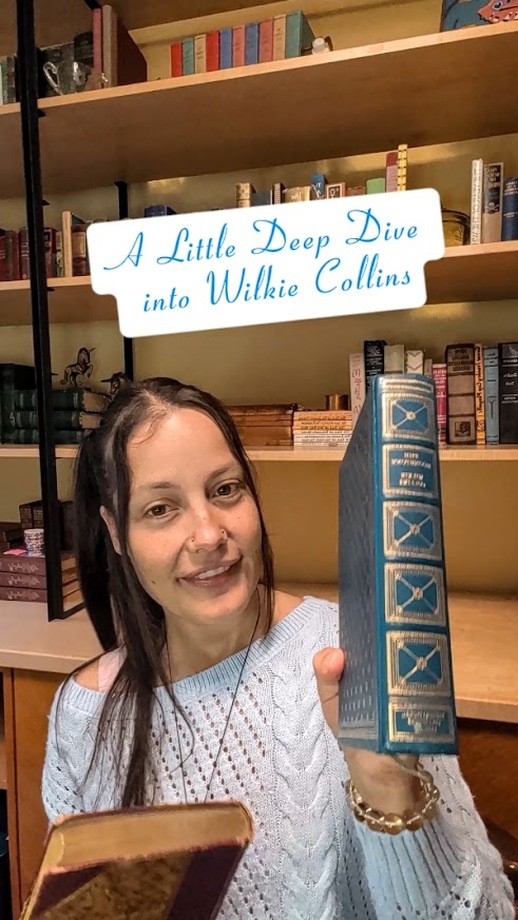
When an interesting old book comes through Ash Tree Books, I often find myself wanting to know more than simply its publication date and edition.
I like gathering the pieces: the publishing history, the story behind the author, how the book was originally presented to readers, and the influence it may have had on literature that followed.
Sometimes one book leads to another, and before long I’m looking at an entire period of literary history.
That happened with these two books by Wilkie Collins.
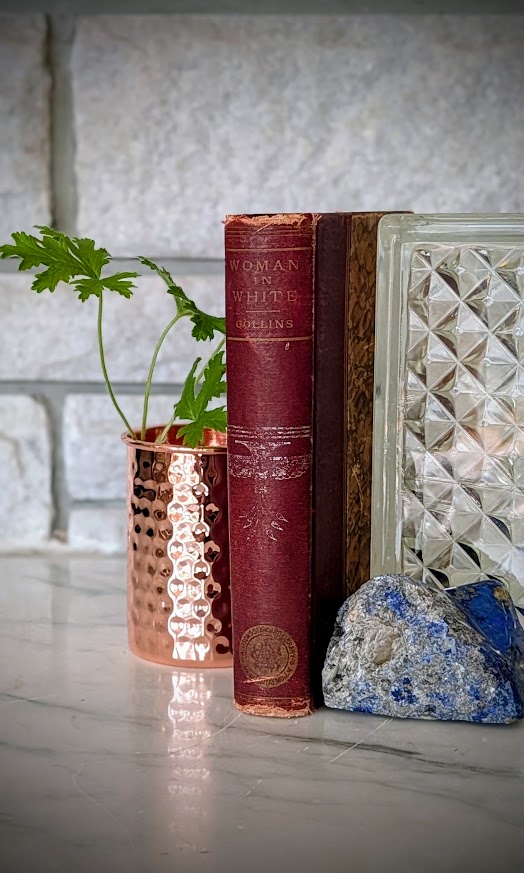
The Woman in White is one of Wilkie Collins’s best-known novels and an important work of Victorian sensation fiction. First published in serial form in 1859–1860, it captivated readers with mystery, secrets, deception, hidden identities and suspense.
This particular copy is a c. 1890s Allison’s Standard Library edition, with its distinctive maroon binding, decorative marbled front panel, gilt top edge and decorative endpapers.
First published in 1860, The Woman in White became one of the defining works of Victorian sensation fiction. Collins helped popularize a style of storytelling built around mystery, secrets, deception, suspense, hidden identities, and dramatic revelations — elements that would continue to influence mystery and thriller writing long after the Victorian era.
View The Woman in White at Ash Tree Books
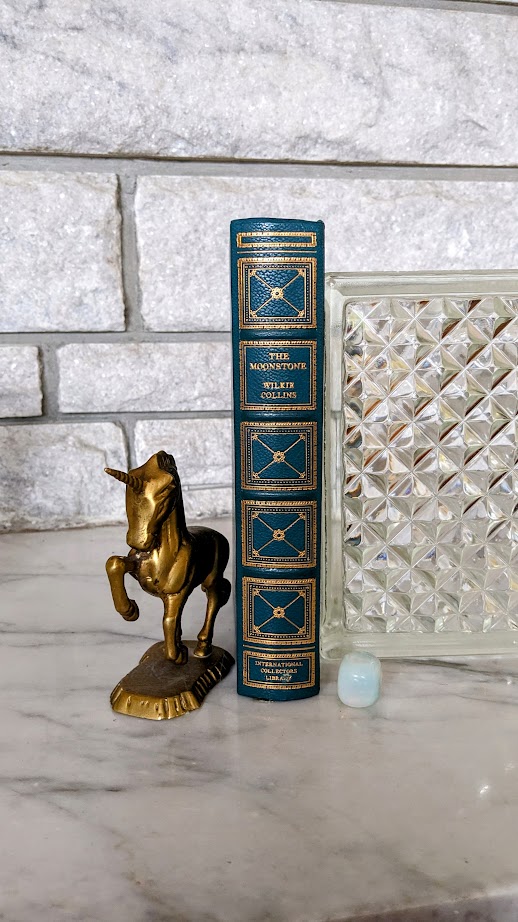
Originally published in 1868, The Moonstone is widely regarded as an important early detective novel. The story centres around the theft of a valuable diamond and unfolds through multiple narrators, clues, mystery and investigation.
This 1944 Garden City edition features teal blue boards with elaborate gilt decoration, illustrations by William Sharp, an uncut textblock and a permanent ribbon marker.
Published in 1868, The Moonstone is often regarded as one of the foundational detective novels in English literature. Collins’s use of multiple narrators, conflicting accounts, clues, investigation, and the gradual uncovering of the truth helped establish storytelling techniques that became central to the detective genre. Its influence can still be seen in mystery fiction today.
View The Moonstone at Ash Tree Books
Why I Love Going Down These Rabbit Holes
For me, this is part of what makes old books so interesting.
An old book isn’t just the story printed inside it. There is also the physical book—the binding, paper, illustrations, publisher, edition and the way it was presented to readers at a particular moment in history.
And then there is everything surrounding it: the author, the readers who first encountered it, the publishing world it came from, and the writers and genres it influenced afterward.
Sometimes you’re not just holding a book.
You’re holding a small piece of a much bigger story. 📚
⋆。°✩ 🌌 📖 ✩°。⋆