
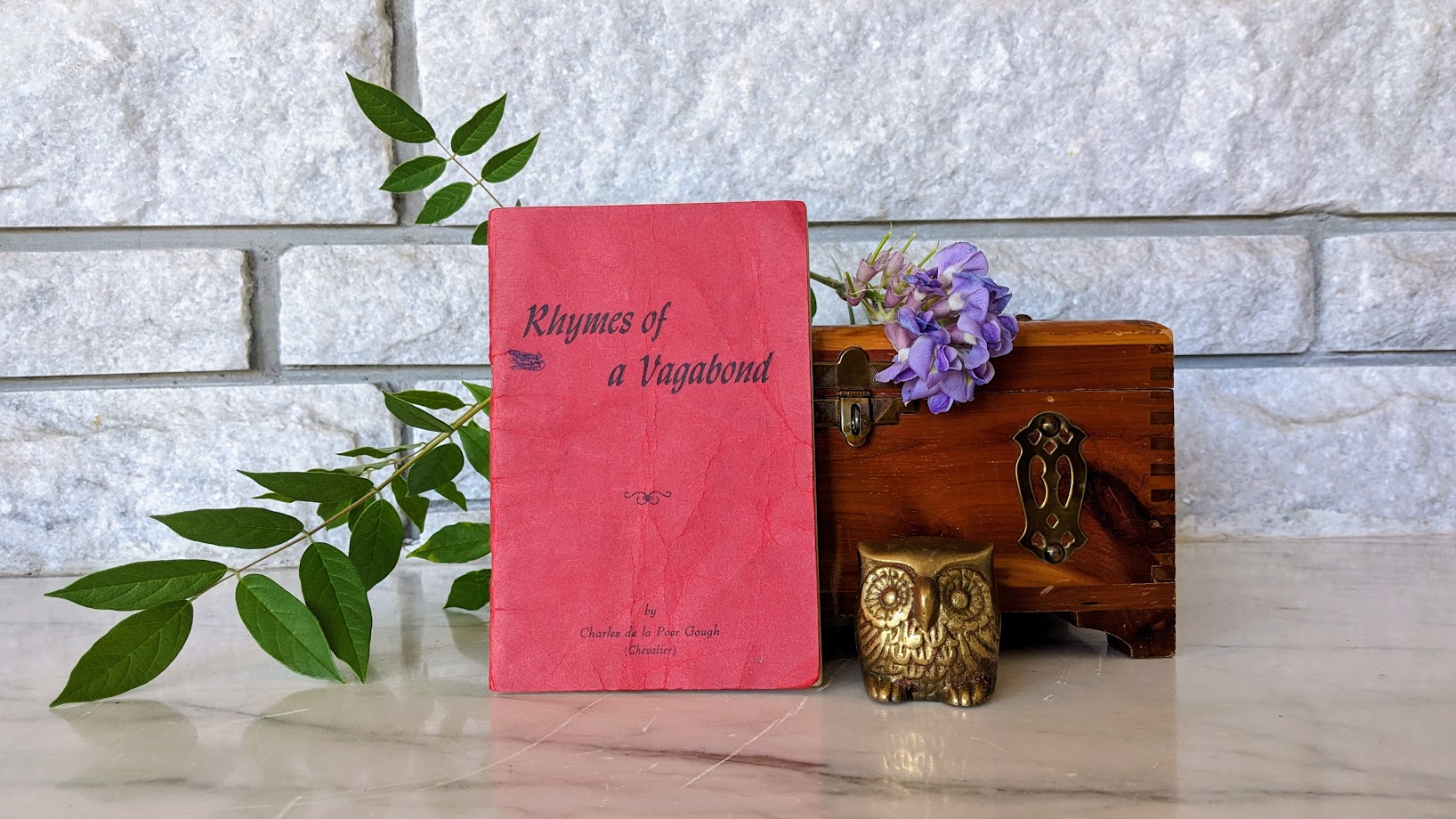
I wasn’t expecting this little small-press red booklet to charm me the way it did, but Rhymes of a Vagabond by Charles de la Poer Gough has that certain je ne sais quoi. Published in 1949, it’s a slim, creased-up booklet of poetry with a signature scrawled boldly over a photograph of the author standing next to someone named Bill Ward. The signature is in pen, and under magnification you can still see the pressure from the ink — a lovely detail for collectors.
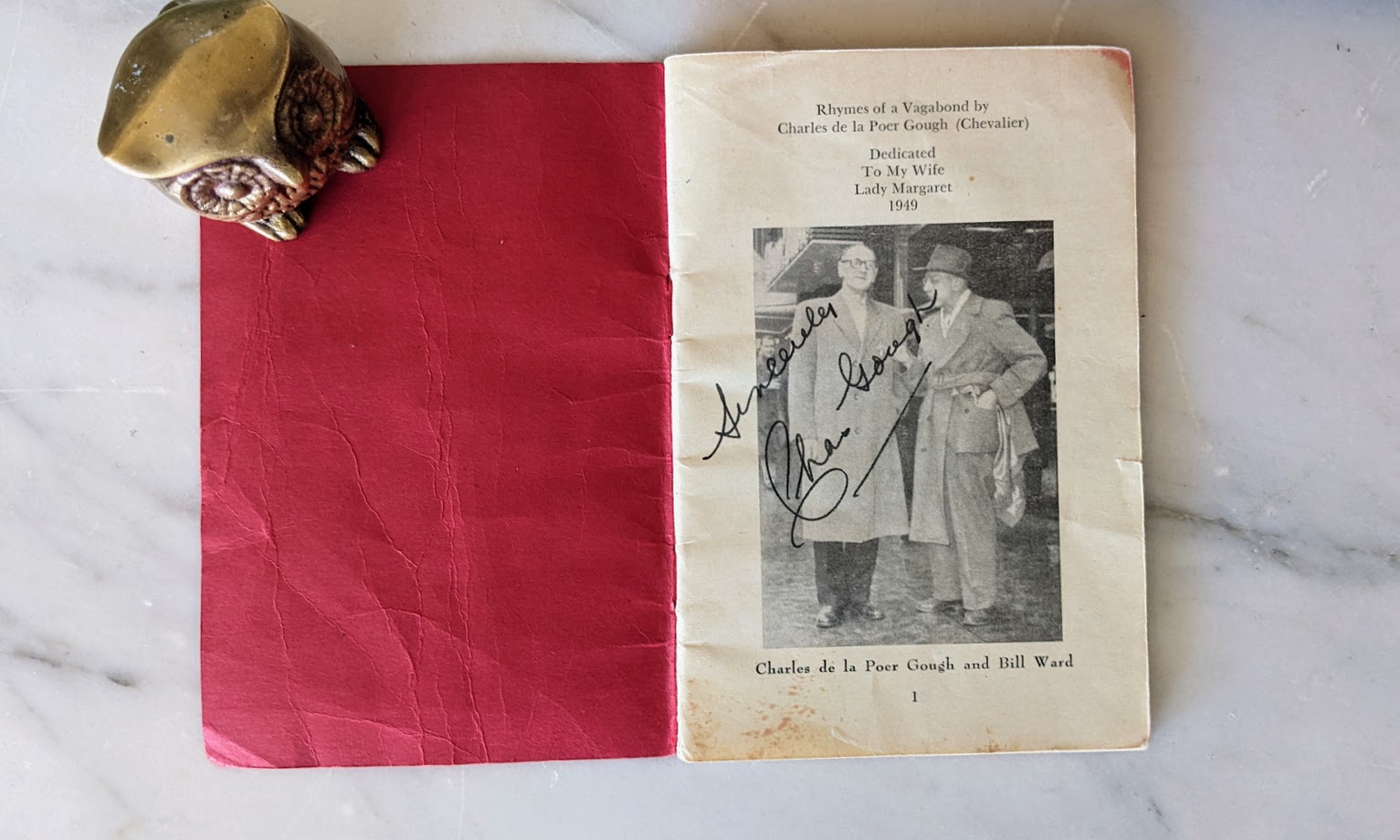
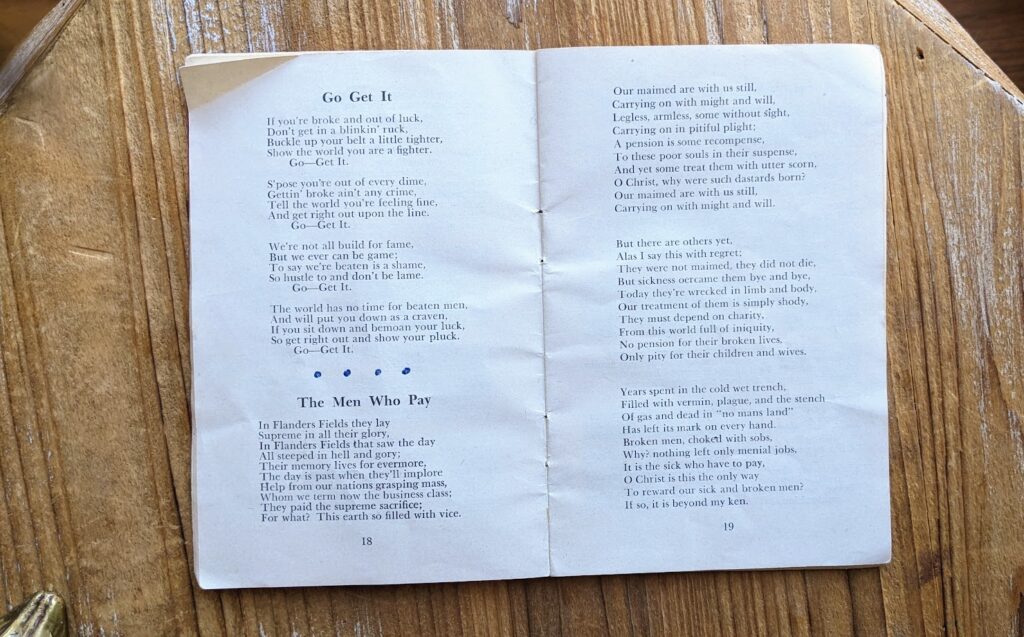
The author called himself “Chevalier,” which adds a bit of theatrical flair. I couldn’t find much about him anywhere, which leads me to believe this was self-published or printed in very small numbers. There are pen marks throughout — little blue dots between most of the poems, and a pen swirl on the cover.
It feels like the kind of thing that was meant to be read aloud — so I gave it a try.
In today’s video, I read a poem in the booklet called Go Get It. Then my daughter Kotori walked by, and I asked if she wanted to help. She read it straight through — better than me, since I couldn’t help pausing to chat.

You can watch the full video below — and if you’re curious about the book itself, you can view the signed copy here:
📘1949 Rhymes of a Vagabond by Charles de la Poer Gough – Signed Copy, Scarce Small-Press Booklet
This piece is now listed in my shop. It’s not pristine — there’s wear and some quirky reader markings — but it’s full of personality and mystery. A signed 1949 booklet by a little-known poet with a flair for the dramatic? Definitely a curiosity worth sharing.




Reading about Rhymes of a Vagabond brings to mind the timeless appeal of poetry that captures the wandering spirit. Collections like this often reflect a deep connection to nature, freedom, and self-reflection, inviting readers to experience life beyond routine boundaries. The title alone suggests a journey through emotions and landscapes, where each rhyme becomes a step along a solitary path. Works from that era carry a unique rhythm and tone, blending post-war reflection with the universal desire for exploration and meaning. Engaging with such poetry allows one to feel both the weight of history and the lightness of wanderlust in every verse.
Thank you so much Slavisa for sharing this reflection. I love how you put into words the sense of journey and freedom that poetry like Rhymes of a Vagabond evokes. There’s something very special about how these works capture both the weight of their time and a universal longing for meaning and connection.