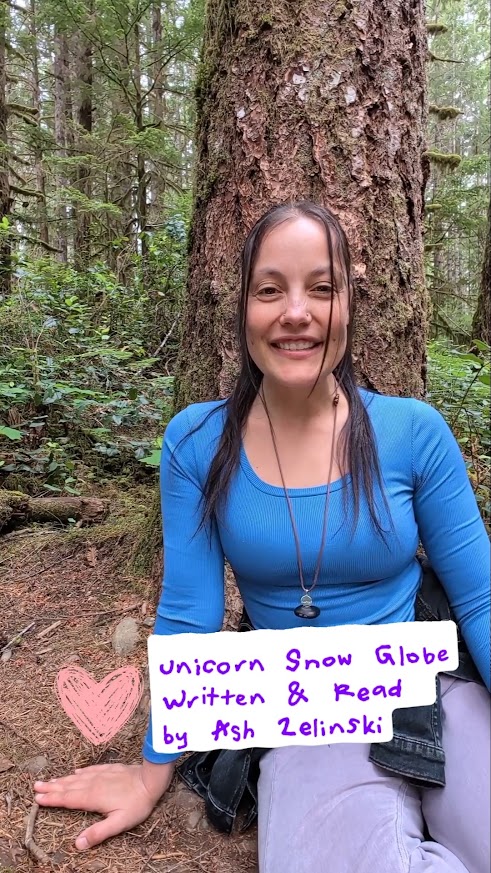
Episode #15 of Just a Girl Under a 🌲 Tree, Reading a 📖 and Asking It to Love💗 Her
Usually, these quiet moments beneath the trees begin with a book that has found its way into my collection.
Today is a little different.
Instead of opening the pages of another writer, I’m opening one of my own.
Unicorn Snow Globe began as a memory from childhood. As I wrote, however, it slowly became something else—a reflection on wonder, inherited fear, compassion, and the stories we quietly carry from one generation to the next.
For those familiar with my work through Ash Tree Runes, this poem also carries the quiet presence of ᚨ Ansuz, ᚷ Gebo, and ᛉ Algiz.
Ansuz reminds me that words can arrive as gifts when we are willing to listen.
Gebo speaks to the exchange that happens every time a poem is shared—what begins as one person’s memory quietly becomes another person’s reflection.
Algiz stands as a gentle reminder that true protection is not found in closing every door, but in learning to walk with awareness, discernment, and an open heart.
As I sat beneath the tree reading these words aloud, I also found myself thinking about ᛚ Laguz.
Not simply as water, but as memory itself.
The kind of remembering that doesn’t force answers, but gently asks us to look again.
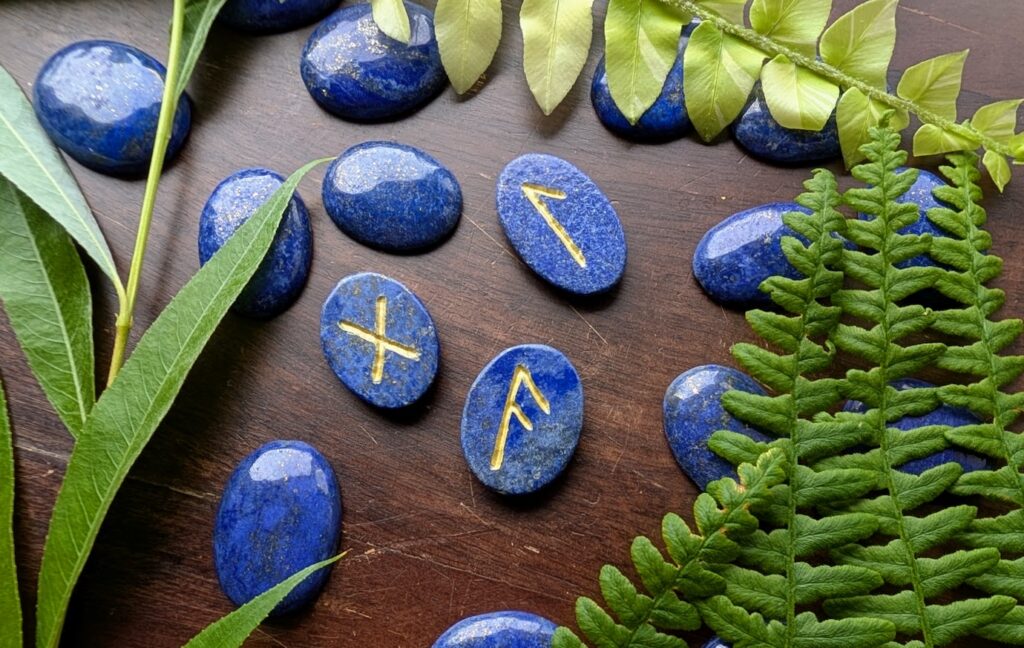
Currently available through Ash Tree Books
ᚨ Ansuz • ᚷ Gebo • ᛉ Algiz
Perhaps the poem is about a unicorn.
Perhaps it is about a snow globe.
Or perhaps it is simply about the quiet moment when compassion becomes greater than certainty.
Unicorn Snow Globe
Unicorn Snow Globe
An original poem by Ash Zelinski
They said unicorns were never real.
Not the white horse
with a borrowed horn,
but the part of us
that still remembered
how rivers once carried light,
how stones hummed beneath bare feet,
how every spring
knew its own name.
They built monuments
over forgotten doorways.
Covered wells with marble.
Taught us to mistake
echoes for answers
and maps for the land itself.
Some say
the old language was reversed,
alchemy folded inside-out,
living waters renamed,
lines of light buried
beneath roads and certainty.
Maybe.
Or maybe forgetting
is always quieter than that.
One Christmas,
someone gave me
a unicorn snowglobe.
Inside,
a white creature stood patiently
while silver snow
circled around it
like tiny stars
that had forgotten
which way was home.
I loved it.
My mother didn’t.
She looked at it
the way people look
at doors they’ve been taught
should never be opened.
She called it false.
Or dangerous.
Or something close enough
that the words
still blur together.
Then she carried it away.
I cried for a snowglobe.
Years later,
I wonder
if she was crying too—
not for the unicorn,
but for whatever story
had taught her
to fear wonder itself.
Because fear
has a curious way
of inheriting children.
It doesn’t always burn books.
Sometimes
it quietly removes
the snowglobe
from a little girl’s room
and tells her
it is protecting her.
I don’t blame her anymore.
She was guarding
the walls
someone else had built.
Now,
when I think about
forgotten waters,
hidden pathways,
or the old art
of turning darkness
into light,
I think less
about conspiracies,
and more
about mothers
who loved fiercely enough
to mistake imagination
for danger.
Somewhere,
perhaps beneath stone,
perhaps beneath memory,
the unicorn
is still standing,
waiting for someone
to shake the world again
and watch
the snow remember
how to fall.